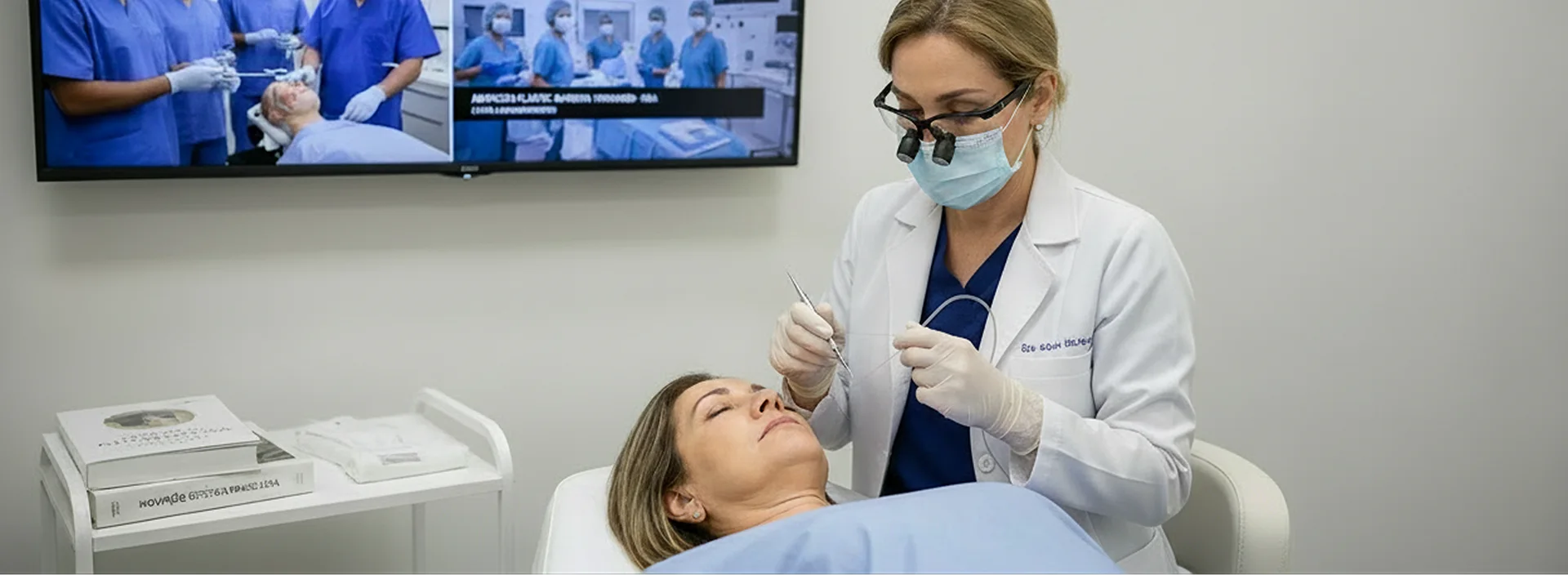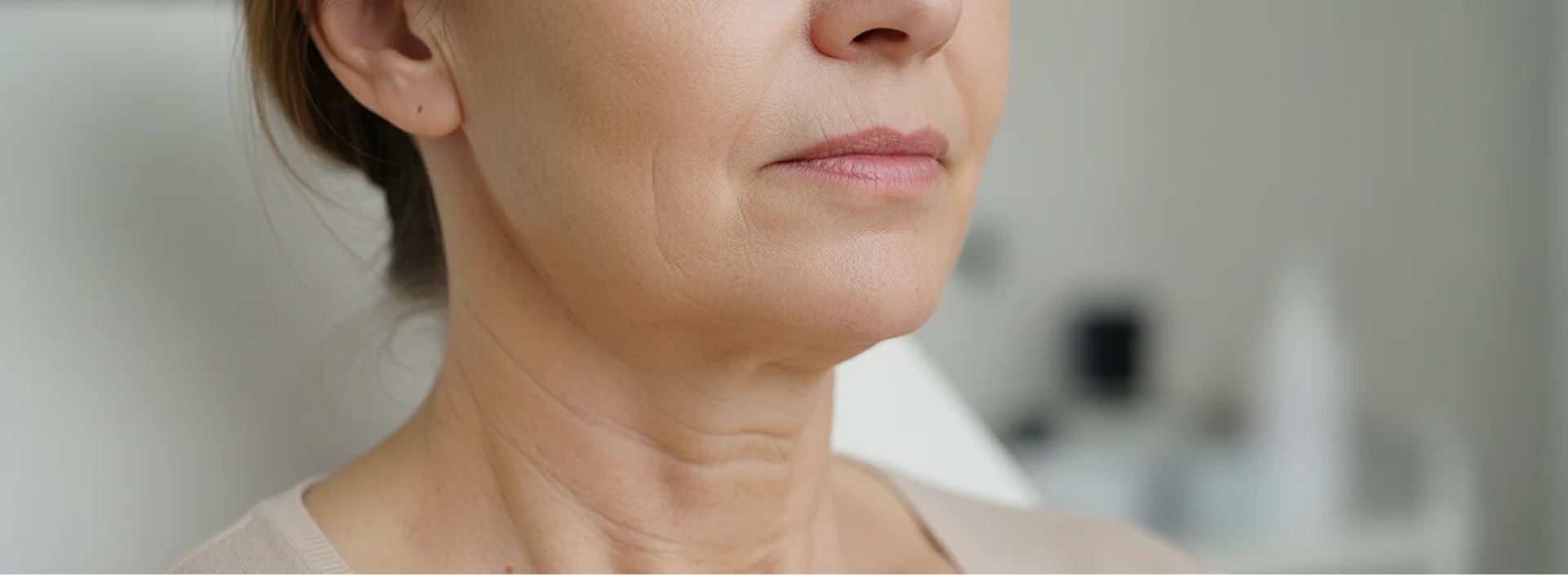
From a medical perspective, the lower third of the face and the neck represent one of the most complex anatomical challenges in anti-aging aesthetic medicine. Unlike the face, where strong bone structures like the cheekbones provide a solid foundation to anchor tissues, the neck lacks these natural support points. In addition, cervical skin is histologically different: it is significantly thinner, has fewer sebaceous glands, and contains very little subcutaneous fat. These characteristics make it highly vulnerable to elastosis (loss of elasticity caused by sun damage) and the constant pull of gravity. Treating the dreaded “double chin” or neck bands requires far more than a cosmetic fix—it demands a deep clinical understanding of how the skin, submental fat, and the platysma muscle interact. At Galex Clinic, we approach this complex system with advanced thread lift techniques designed to restructure and densify the area—without invasive surgery.

The Platysma Muscle and the Mechanics of Sagging
To truly correct neck aging, a physician must understand how the platysma muscle behaves. This wide, flat muscle extends from the chest up to the lower jaw. Over time, its inner edges begin to separate and lose tone, forming the well-known vertical “platysmal bands” that visibly age the neck. At the same time, the mandibular ligament weakens, allowing cheek fat to descend and blur the definition of the jawline. Traditional filler-based approaches in this area often lead to a heavier, bulkier appearance. The right clinical strategy involves using bidirectional or multidirectional barbed threads to create a submental “hammock.” This advanced technique lifts sagging tissue, repositions underlying fat, and generates upward and backward traction toward the mastoid fascia (behind the ear), restoring the sharp, youthful cervicomental angle.
Redensification Technique: Strengthening Delicate Skin
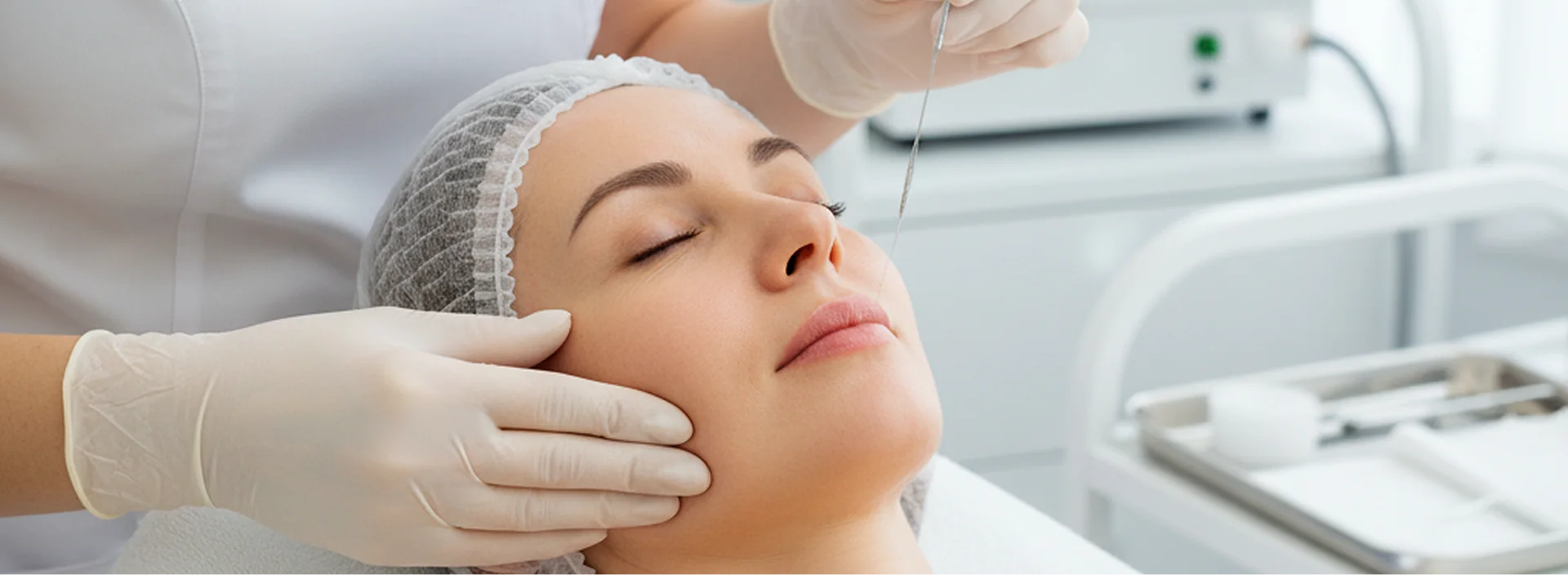
One of the exclusive protocols used by our specialist trained in Brazil and the U.S. is assessing dermal thickness before applying any lifting force. When a patient presents with crepey or overly thin neck skin, placing traction threads directly can result in visible irregularities. The medical solution is the “mesh technique.” Multiple smooth Polydioxanone (PDO) threads are inserted in a crosshatched grid pattern within the subdermal layer. While these threads don’t pull the tissue, they act as powerful biostimulators. In the weeks that follow, they trigger angiogenesis (the formation of new blood vessels) and a significant increase in fibroblast activity. This process thickens the skin from within, restoring firmness, elasticity, and deep hydration. Once the tissue has been properly reinforced, anchoring threads can be placed to achieve a smooth, natural-looking lift.
Jawline Redefinition: Where Face Meets Neck
The visual boundary between the face and neck is defined by the sharpness of the jawline. In patients who have lost this contour due to fat accumulation or skin laxity, Galex Clinic approaches thread lifting with a fully three-dimensional strategy. Long cannulas are used to place threads along the jawline, anchoring them securely into the preauricular ligament structures. This vector not only lifts sagging tissue but also smooths it backward, sculpting a refined and elegant contour. Precision is critical here, as the technique requires carefully avoiding structures such as the submandibular gland and the external jugular vein. Only a physician with advanced anatomical surgical training can navigate these layers safely, ensuring zero vascular risk and delivering truly elite aesthetic results.
Where Aesthetic Medicine Meets Surgical-Level Results
Historically, patients with moderate to severe neck laxity had only one option: neck surgery (cervicoplasty). Today, Galex Clinic’s exclusive technique redefines those limits. By combining deep expertise in skin histology, precise vector mechanics, and long-term biostimulation, we achieve tissue contraction results that rival surgery—without periauricular scars or the risks associated with general anesthesia. The result is a rejuvenated profile, where the skin naturally adapts to the underlying muscular contours. This is regenerative medicine and applied biomechanics working together to restore elegance and redefine the anatomy of your neck.