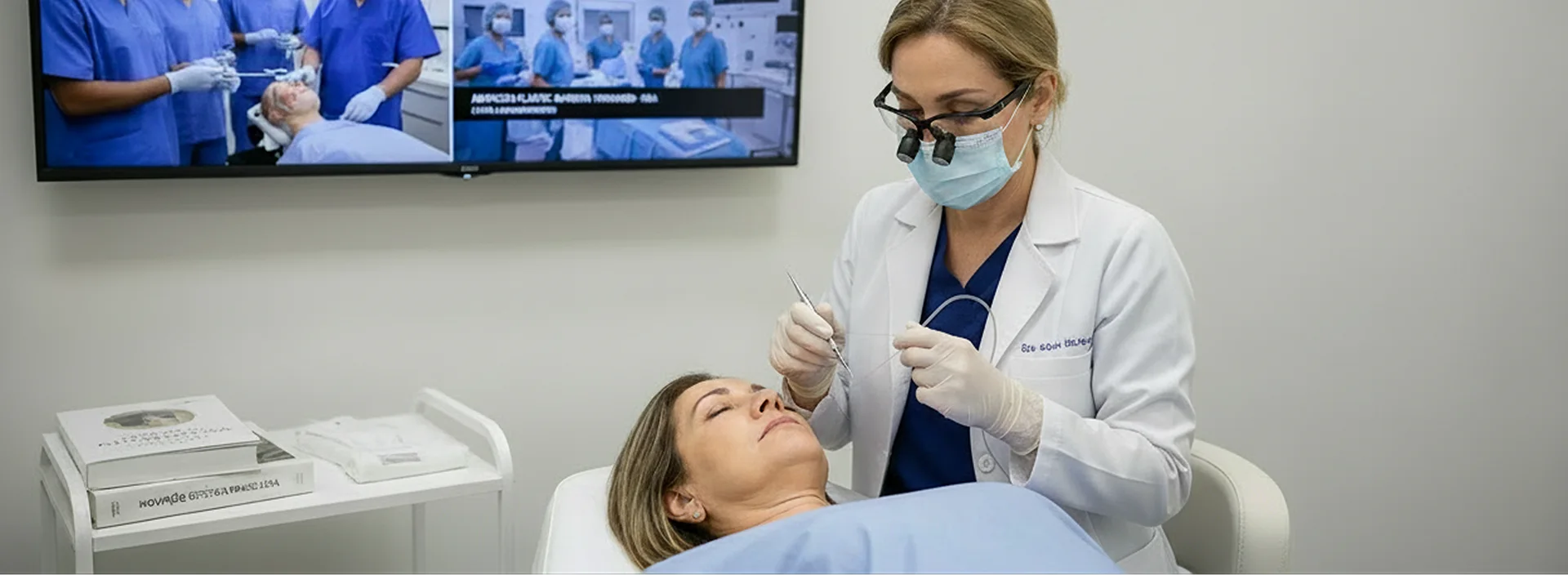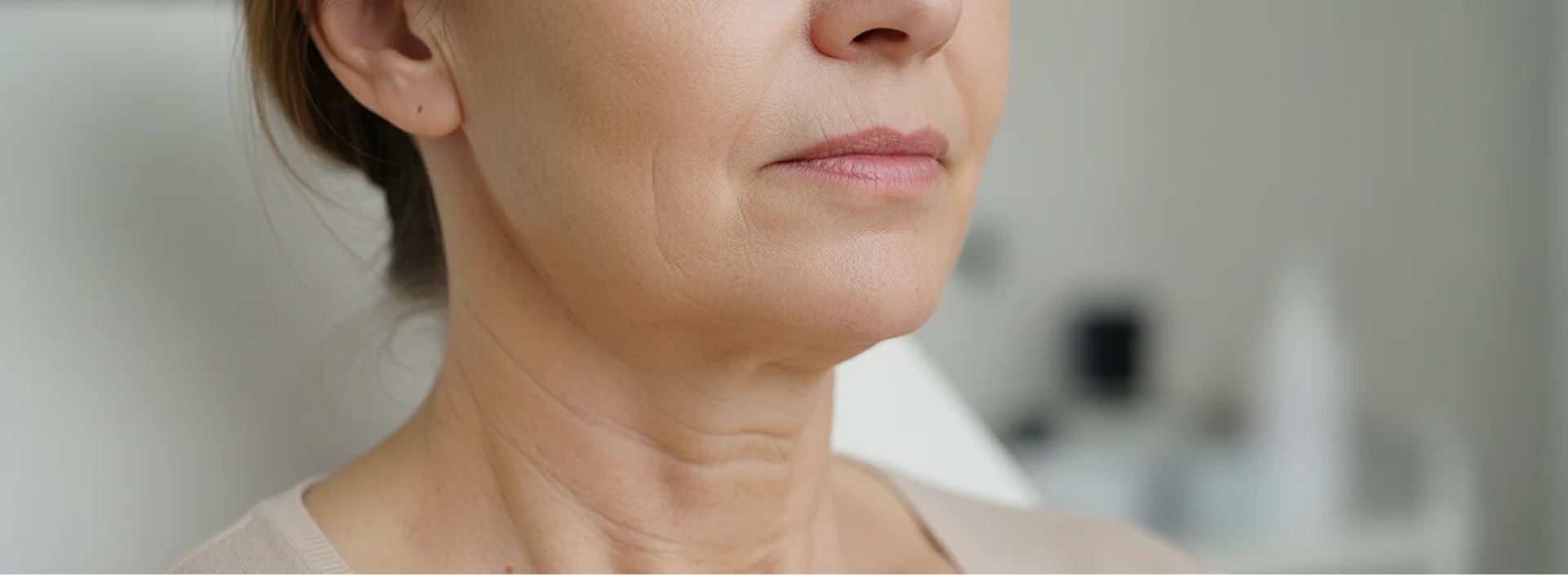
Facial aging isn’t a flat, surface-level process limited to wrinkles. From a medical and anatomical standpoint, it’s a three-dimensional structural collapse. Over time, the face undergoes bone resorption (loss of volume in facial bones), atrophy of both deep and superficial fat compartments, and significant laxity in the retaining ligaments and the SMAS (Superficial Musculoaponeurotic System). Trying to correct this tissue descent using only creams or volumizing fillers is a clinical mistake that often results in heavy, unbalanced features. True rejuvenation requires a combined mechanical and biological approach: restoring tissues to their original position. This is where medical-grade thread lifts, performed with surgical precision, become the gold standard for non-invasive facial rejuvenation.

Repositioning vs. Tightening: The Clinical Difference
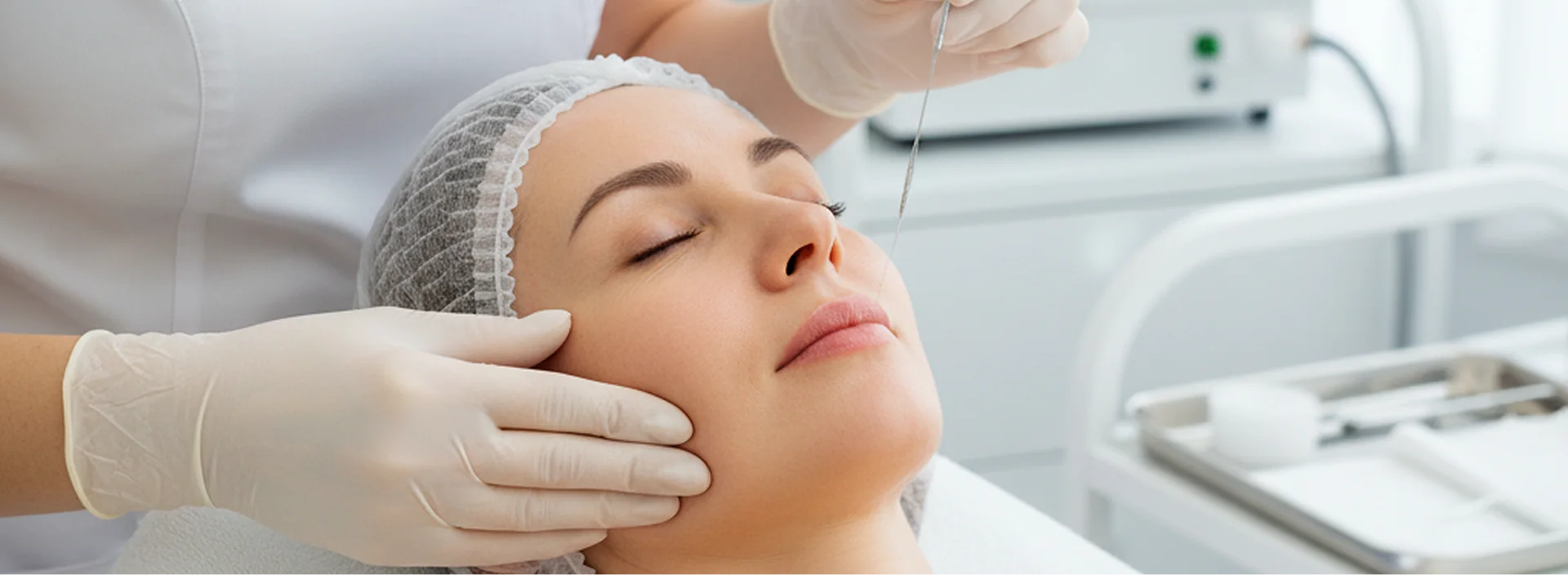
One of the most common misconceptions in aesthetic treatments is the idea of simply “tightening” the skin. Medically, pulling the skin without addressing the deeper structures creates an artificial look—the classic over-pulled or windblown appearance. At Galex Clinic, our specialist focuses on deep traction vectors. Thread lifts, whether made from Polydioxanone (PDO) or Poly-L-lactic Acid (PLLA), are designed with microscopic barbs or cones that anchor directly into dense subcutaneous tissue and fascia. By applying tension along anatomically safe lines, we’re not stretching the skin—we’re lifting the fat compartments that have descended due to gravity (such as jowls) and securing them in a higher, stable position. This level of precision requires an in-depth understanding of facial musculature and vascular anatomy to ensure results that are symmetrical, long-lasting, and naturally aligned with each patient’s expressions.
Neocollagenesis: The Long-Term Biological Response
The success of a thread lift unfolds in two key phases. The first is the immediate mechanical lifting effect—the visible lift you notice right after the procedure. The second, and more clinically significant, is the body’s fibroblastic response. When a biocompatible material is introduced into the deep dermis, the immune system triggers a controlled healing cascade. Over the following months, as the thread safely dissolves through hydrolysis, neocollagenesis occurs—the production of new collagen fibers (types I and III), along with elastin and natural hyaluronic acid. This process creates a fibrous support network along the path of the thread. At Galex Clinic, our exclusive technique—refined through Brazilian expertise—maximizes this dermal matrix, ensuring that even after the thread has fully dissolved, your skin retains its firmness thanks to its own regenerated structure.
Vector Mapping: Engineering Applied to Anatomy
Thread lifting is not a random procedure—it’s a precise application of physics to human anatomy. Every needle or cannula must follow a specific “vector,” a directional line of force. If the wrong vector is chosen, tissue can bunch up, causing dimpling or noticeable asymmetries. With advanced training in both the United States and Brazil, our specialist designs a fully customized vector map for each patient. Both fixed and mobile anchoring points of the face are carefully evaluated, using strong ligaments (such as the zygomatic or masseteric ligaments) as structural support. This level of precision ensures that lifted tissue holds its position despite daily movements like speaking or chewing, delivering stable, natural-looking results that elegantly resist gravity.
Anatomical Safety in the Correct Tissue Plane
The greatest risk when thread lifts are performed by untrained providers is entering facial danger zones—major arteries, the parotid gland, or branches of the facial nerve. High-level aesthetic medicine requires working strictly within the safe subcutaneous plane (the superficial fat layer). Placing a thread too superficially can make it visible or cause extrusion through the skin; placing it too deep can compromise critical vascular and nerve structures. At Galex Clinic, our exclusive technique uses atraumatic blunt-tip cannulas that glide through the correct tissue plane, separating structures without cutting them. This dramatically reduces the risk of bruising, severe inflammation, and damage to vital anatomy. The result is a highly refined procedure that delivers the dramatic rejuvenation of a surgical lift, with the safety standards and minimal downtime only true medical expertise can provide.